
Health Ministry steps up nationwide ‘Epuka Uchafu, Afya Nyumbani’ disease-prevention campaign
JUDY SHERI -PCO
The Ministry of Health has stepped up its nationwide disease-prevention campaign with the activation of the Epuka Uchafu, Afya Nyumbani initiative in Kiambu County, underscoring its commitment to community-centred, preventive public health interventions.
The activation, held at Ruiru Market, was led by the Principal Secretary for Public Health and Professional Standards, Mary Muthoni, who highlighted the critical role of environmental cleanliness in safeguarding health.
She noted that nearly half of all illnesses are linked to environmental factors, stressing that preventable diseases continue to place an unnecessary burden on households and the healthcare system.
Muthoni announced that the Epuka Uchafu, Afya Nyumbani campaign will be rolled out across all counties to promote clean environments, healthy behaviours, and early disease prevention at household and community levels.
As part of the Kiambu launch, she inaugurated a 16-member multi-agency steering committee tasked with coordinating implementation, enforcement, and accountability of the initiative at county level.
The committee brings together national and county government actors to ensure sustained delivery of sanitation, hygiene, and environmental health interventions.
The PS directed public health officers to strictly enforce existing laws governing sanitation, hygiene, and environmental management.
She urged Kenyans to adopt basic but lifesaving practices such as hand-washing after toilet use, regular bathing especially for children, proper waste disposal, and maintaining clean living and trading environments.
Warning that poor hygiene and unsafe surroundings continue to fuel outbreaks of cholera, bilharzia, and malaria, Muthoni stressed the importance of clean markets, functional dustbins, and well-managed public spaces.
She also emphasized the need for safe drinking water and consistent toilet use, calling on county governments to adequately resource public health services.
Beyond sanitation, the PS encouraged early health-seeking behaviour and registration with the Social Health Authority (SHA), noting that primary healthcare services are provided free of charge and are critical to preventing complications from delayed treatment.
She also raised concern over illicit brews and narcotic drug abuse, particularly in Kiambu and neighbouring counties, warning that substance abuse destroys families, disrupts education, and increases the risk of serious illnesses including cancer.
She called for coordinated action to protect children and young people from these emerging social health threats.
Kiambu becomes the 12th county to activate the Epuka Uchafu, Afya Nyumbani campaign, joining Turkana, Nakuru, Murang’a, Tharaka Nithi, Kisumu, Migori, Narok, Kisii, Machakos, West Pokot, and Laikipia.
The initiative is aligned with Kenya Vision 2030, the Constitution of Kenya 2010, and the Kenya Environmental Sanitation and Hygiene Policy (KESHP) 2016–2030, which recognises sanitation as a constitutional right under Article 42 and places responsibility on county governments to ensure its progressive realisation.
Under the community-centred Afya Nyumbani Universal Health Coverage model, the Government has deployed more than 107,000 Community Health Promoters, supporting over 9,100 Community Health Units and 315 Primary Care Networks nationwide.
This approach strengthens primary healthcare delivery, enhances disease prevention, and positions Kenya as a regional leader in people-centred health systems.
Muthoni commended Kiambu County for recognising public health risks linked to rapid urbanisation, waste management, and climate change in its County Integrated Development Plan (CIDP) 2023–2027, particularly within the Water, Environment, Energy and Natural Resources sector.
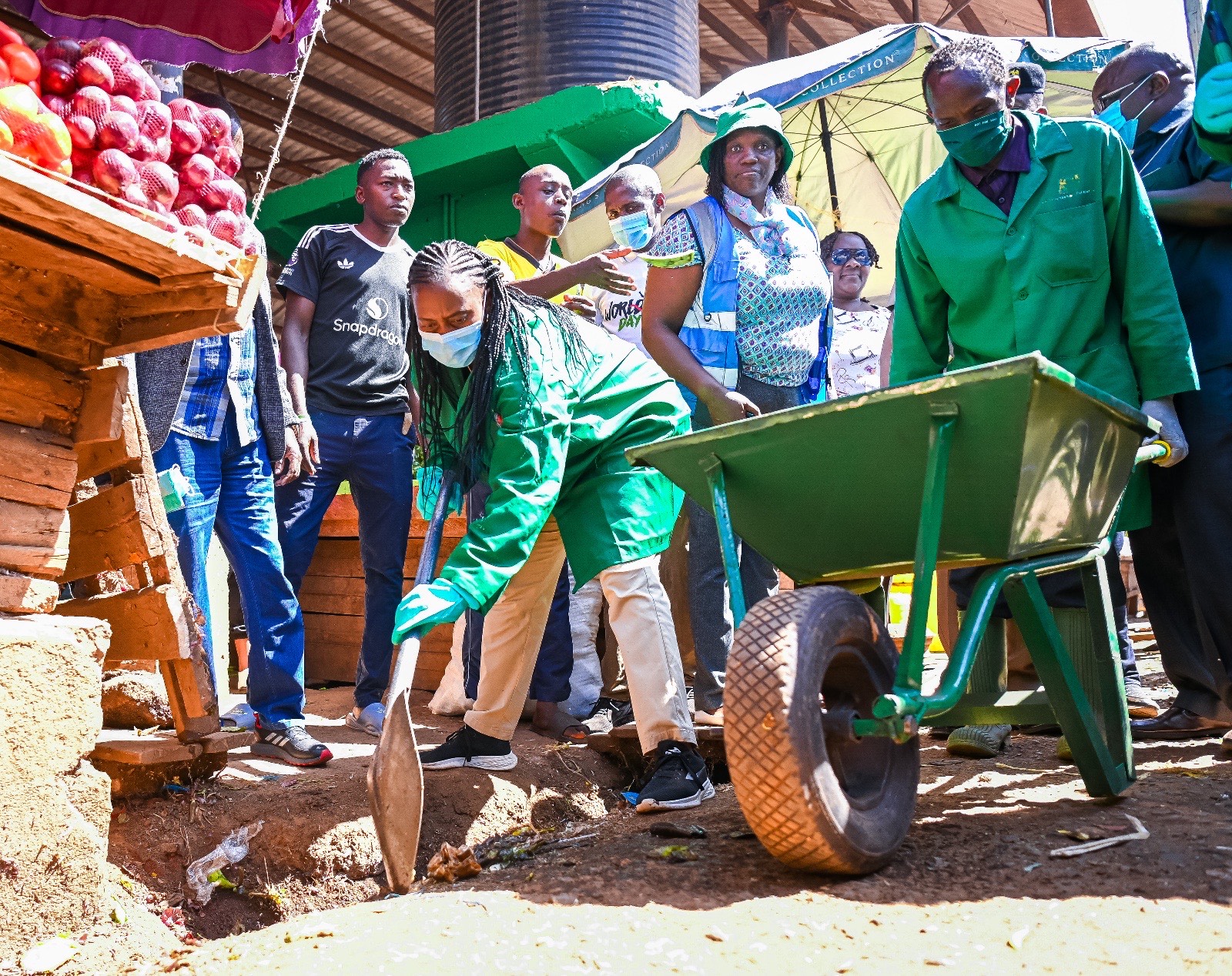
The activation concluded with a market clean-up exercise, reinforcing the campaign’s core message that clean homes and environments are the foundation of healthy communities. Communities free from substance abuse, she added, are better positioned for sustainable social and economic growth.