
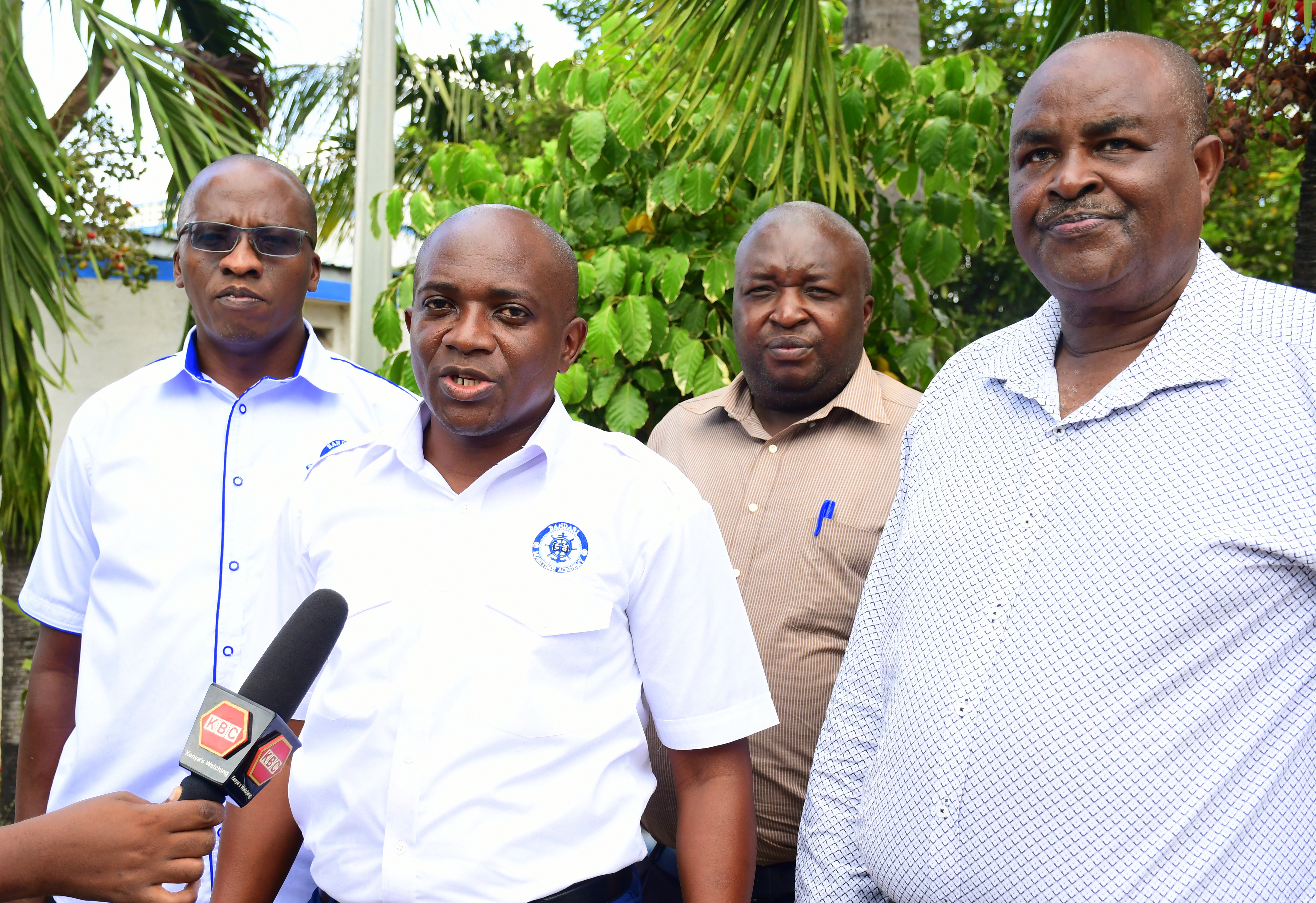
Academy promotes maritime training to tap into Blue Economy jobs
Sadik Hassan-KNA
The Bandari Maritime Academy (BMA) is stepping up efforts to promote maritime training to meet global demands as plans are at an advanced stage for the country to start issuing the mandatory Seafarers Identity Document (SID).
SID facilitates the entry of seafarers on board a vessel to countries where the vessels call for shore leave, transit, transfer or repatriation.
The International Chamber of Shipping Seafarer Workforce Report 2021 recommends that the industry must significantly increase training and recruitment levels if it is to avoid a serious shortage in the total supply of officers by 2026.
The report shows that there will be a need for an additional 89,510 officers by 2026 to operate the world merchant fleet. The report estimates that 1.89 million seafarers currently serve the world merchant fleet, operating over 74,000 vessels around the globe.
To ensure that youths employed on international vessels are not laid off due to lack of SID, the government, through BMA, is keen to fast-track the issuance of SID in the country.
“It has been a setback for many seafarers working on ships. We are at advanced stages of ensuring the document is issued here in Kenya for all seafarers. We do not want them to be returned after securing employment due to lack of the document,” the BMA CEO, Dr. Eric Katana said.
Dr. Katana further highlighted that the country has inked Memorandums of Understanding (MoU) with nations with many registered vessels for graduates to be employed and to get a mandatory one-year sea time.
“We have MoUs with countries like Liberia, Jamaica, Panama and Malta to employ our youths. As a country and government, we do not own vessels.
"We have been forced to have pacts with the countries to employ Kenyans,” said Dr Katana, adding that they are finalizing one with the government of Japan.
The Academy is also partnering with local shipping lines like Lamu Shipping Limited to help their students to get sea time.
“Sea time is a major hurdle in training not only for Kenya but many countries because the vessels are not enough to train the seafarers in the country,” Dr Katana stated.
Admittedly, he noted that the Dar es Salaam Maritime Institute (DMI) is steps ahead as they were deliberate investments in equipment for advanced training.
He lauded the government for prioritizing the Blue Economy, adding that plans are underway to procure equipment for the Academy to commence advanced courses.
“We have a Cabinet Secretary and Principal Secretary who are committed to ensuring that Bandari is well equipped to offer all the courses for Kenyans. We are related well with DMI; we are not competitors but complement one another in the spirit of the East African Community,” Dr Katana said.
The Academy is also collaborating with colleges to offer maritime courses; for example, in Kisumu, they have partnered with the Railway Training School to establish a Marine school. Youths were urged to seize opportunities in the Blue Economy through training and certification.
The Academy provides skills for the growth of the Blue Economy. The college offers courses from certificate to diploma. The Kenya National Qualifications Authority (KNQA) and TVET Authority duly accredited the courses.
The academy also offers short courses for class eight leavers. Recently, more than 200 youths were trained as lifeguards in Ndau, Lamu East.
This year’s Madaraka Day will be held in Homabay County under the theme Blue Economy and Maritime Affairs. The academy will showcase its works during the national fete.
“Blue Economy will enable the country to prosper economically because it is an unexploited area that has not received many investments,” Dr. Katana said.