
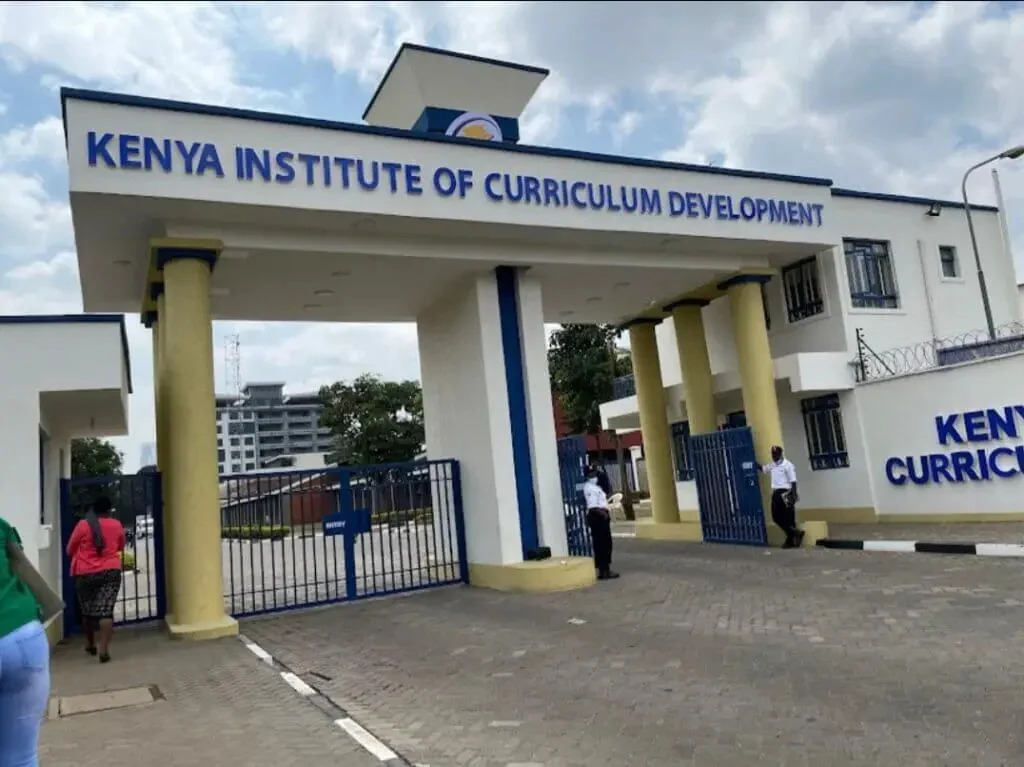
STEM learners to study core Maths, others to take essential Mathematics , reveals KICD boss
Bernard Munyao-KNA
Senior schools will offer two forms of mathematics: one for those taking the Science, Technology, Engineering and Mathematics (STEM) pathway, and another for those taking arts, sports and social sciences.
The chairman of Kenya Institute of Curriculum Development (KICD) Prof. Simon Gicharu said those taking the STEM pathway will pursue core mathematics while those taking arts and sports and social sciences will undertake essential mathematics.
Gicharu, who led alumni of Murang’a High School to visit students at the school said essential mathematics in senior school will play a pivotal role in developing a learner’s computational abilities, critical thinking and problem-solving skills.
“Initially mathematics was not to be compulsory in senior schools but after stakeholders called for the subject to be included among compulsory subjects, KICD factored in mathematics and designed it into two forms,” the Chairman noted.
He explained that mathematics specifically focuses on numbers and algebra as foundation to the course in developing numerical and algebraic thinking.
“It also includes measurements of different quantities, particularly commercial arithmetics which is important for the acquisition and application of financial literacy in real life,” Gicharu, who is also the founder of Mount Kenya University, stated.
He observed that some concepts in geometry are included since they are not only useful in spatial relations but also in navigational skills, while statistics and probability are critical in research and in understanding different population dynamics and phenomena that are useful in solving problems in day-to-day life.
The professor added that learners will be provided with opportunities through Community Service Learning (CSL) to integrate varied skills with instruction and reflection to enrich the learning experience, enhance civic responsibility and strengthen community participation.
“This will be done through intentional learning experiences that allow them to apply knowledge, skills, values and competencies to address identified problems within the immediate environment,” he said.
He mentioned that information communication and technology skills will be offered to all learners to facilitate learning and enjoyment.
“These skills include accessing, creating, digital citizenship, and caring for ICT devices. The teacher should use ICT skills for delivery of lessons,” Prof Gicharu said, adding that every school shall offer Pastoral Programme Initiative (PPI) to enhance moral, spiritual and character development of the learners.
He underscored the commitment of the government in implementing the Competency Based Education, saying all plans are in place for transition to senior schools for learners currently in Grade 9.
“CBC has been successfully implemented in Kenya since 2019, with the first cohort being currently in Grade 9. In 2026, the Grade 9 learners shall transit to Senior School (Grade 10).
“Senior school comprises three years of education for learners in the age bracket of 15 to 18 years and marks the end of Basic Education as defined in the Basic Education Act, 2013,” he explained.
The chairman continued, “Learners exiting this level are expected to be engaged, empowered and ethical citizens ready to participate in the socio-economic development of the nation.”
The learners at senior schools he specified shall take a minimum of seven (subjects) out of which four (4) shall be compulsory. These are English and Kiswahili languages, Physical Education and Mathematics.
Meanwhile, Gicharu lauded Murang’a High School saying the institution has a rich history of nurturing young talents to success, of fostering resilience, and instilling values that have shaped many students over the years to be responsible citizens.