
Women farmers benefit from Egerton’s mechanized farming tips
ESTHER MWANGI-KNA
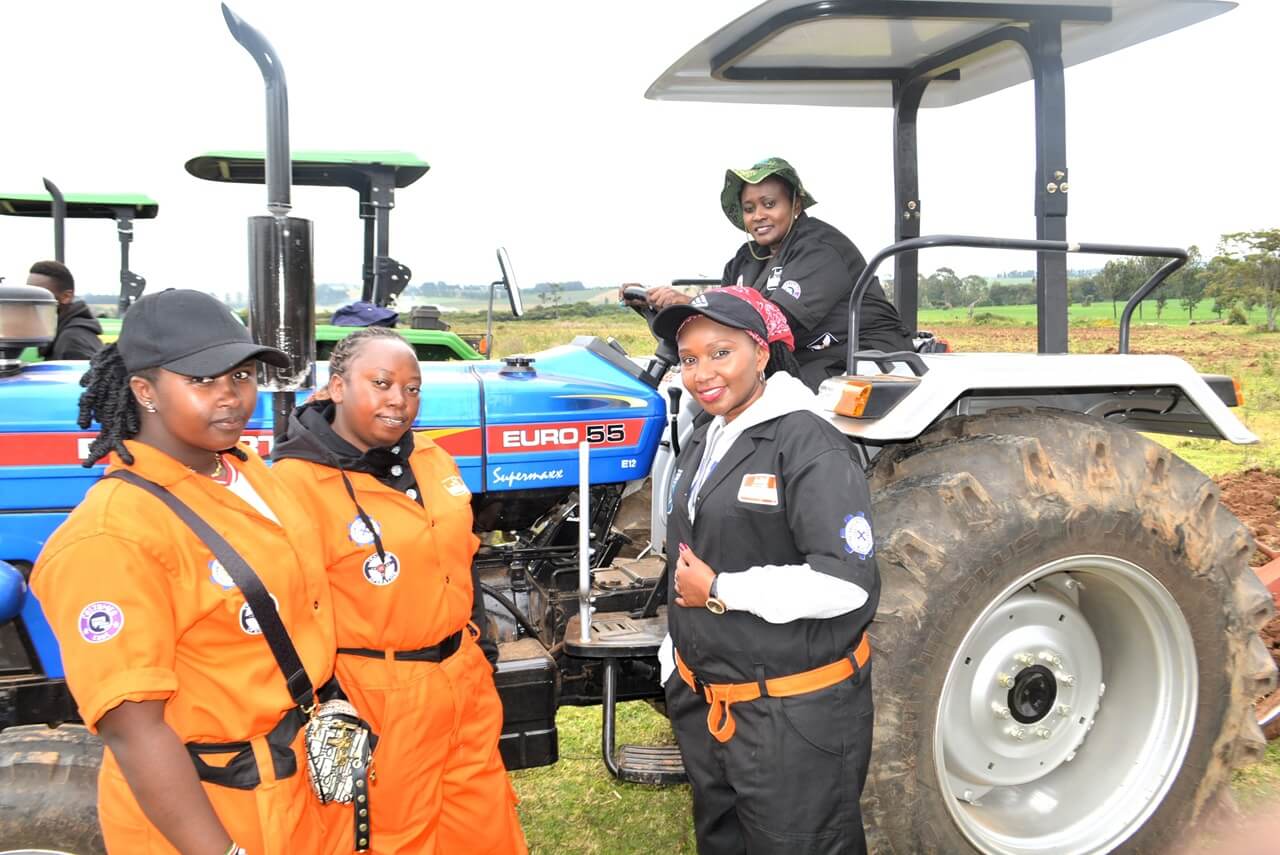
Egerton University is equipping women farmers from nine counties with practical mechanized farming skills to improve food production and enhance food security in the country.
The institution announced that it is developing public-private partnerships to encourage the establishment of mechanization hubs, which will connect providers of mechanized farm services with women smallholder farmers who lack agricultural machinery.
Prof. Bernard Aduda, the University Deputy Vice Chancellor in charge of Academics, Research, and Extension, said they have begun training more than 200 women on mechanized farming from the counties of Kisumu, Bomet, Nakuru, Kericho, Kisii, Nyamira, Laikipia, Uasin Gishu, and Elgeyo Marakwet.
This training aims to help them gain essential skills to ensure food security and over come barriers to improving food systems.
Prof. Aduda explained that the initiative is de signed to provide women farmers with opportunities to adopt better mechanized food production strategies, increase yields, and make farming more attractive to the younger generation.
He added that the institution’s goal is to create a situation where small holder female farmers can access subsidized mechanization, reducing over-reliance on human labor.
Additionally, he mentioned that the university is supporting the government’s Bottom-Up Economic Transformation Agenda (BETA) by launching the seventh cohort of its Agricultural Tractor Operator Training program, which focuses on empowering women through mechanized farming.
“This initiative aligns with BETA’s commitment to increasing agricultural productivity and expanding economic opportunities for grassroots communities,” added Prof. Aduda.
He argued that by empowering women in small-scale farming with access to mechanized farming techniques, Egerton University is working to bolster Kenya’s food security and stimulate rural economies through practical skill development.
The Deputy VC said the training program is being supported by Hello Tractors, One Acre Fund, Kenya Investment Mechanism (KIM), John Deere, CFAO Kenya, Kubota, Massey Ferguson, Heifer International Kenya, CI WaB, and Egerton University’s Faculty of Engineering and Technology.
He said there is a need to boost crop yields to feed Kenyans as a priority, adding that technological advancements had enabled manufacture of light and cheaper machines that could help women small-holder farmers revolutionize agriculture both in terms of quantity and quality of products being grown and processed.
“The University is seeking ways of enhancing food security through mechanized farming, irrigation, and use of quality seeds and appropriate fertilizers,” he further said.
The Deputy VC noted that mechanized farming contributes to timely preparation of land, efficient land use and in creased production in addition to reducing the cost of production and creating more employment opportunities particularly among the youth and women.
Prof. Aduda emphasized the need for traders and dealers in agricultural machinery to equip small-holder farmers with technical know-how to operate and maintain the machinery through field days, work shops, farm visits and seminars to enable them to become commercially viable.
The varsity don stated that Egerton is encouraging dealers and manufacturers of farm machinery to ensure that their products targeting small scale farmers were built with simplicity of design, un surpassed reliability, out standing fuel economy and minimal maintenance requirements.
He said asset financing should be tailor-made to suit the abilities of both small-holders and large scale farmers, saying some new farmers lack experi ence with planters, trac tors and implements.