


Kenyans urged to seek opportunities outside public sector
ALICE WANJIRU-KNA
Th e c o u n t r y ’ s e c o n o m y i s showing signs of resilience and growth, with the government urging citizens to look beyond public sector jobs and embrace opportunities in the private sector.
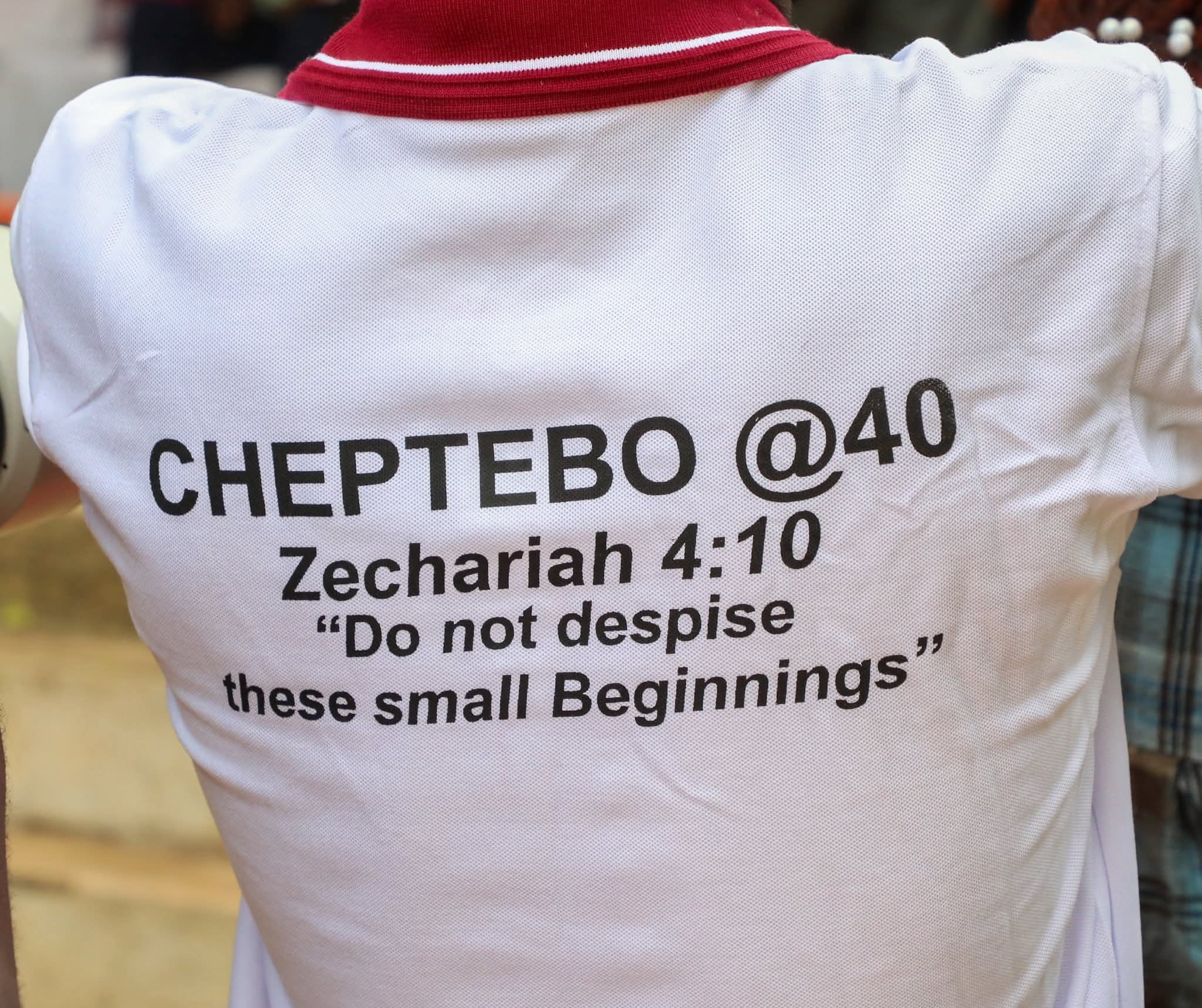
Speaking at the 40th anniversary of Cheptebo AIC Agricultural Training Centre, National Treasury Principal Secretary Dr. Chris Kiptoo said international ratings confirm that Kenya’s economy is on an upward trajectory.
The country’s Gross Domestic Product (GDP) now stands at approximately Sh20 trillion, translating to about Sh300,000 per capita income.
Dr. Kiptoo emphasized that while government employment remains limited, the private sector holds the key to job creation. “We have 21 million Kenyans in the workforce.
"Of these, 3.2 million are formally employed, and only 1 million work in the public sector. The rest are in the informal economy. The reality is that the government cannot absorb everyone—our future lies in private enterprise,” he said.
He noted that agriculture, particularly in Elgeyo Marakwet, has immense potential to drive growth if modern practices are adopted.
He urged farmers to work towards making the region a disease-free zone, enabling local products to meet international standards and access global markets.
“Declaring the area disease-free will open doors for exports, create jobs, and strengthen livelihoods. We must work hard to achieve this,” he added.
Interior Cabinet Secretary Kipchumba Murkomen, who also addressed the gathering, unveiled ambitious infrastructure projects aimed at transforming the Kerio Valley.
He announced the revival of stalled dam projects—Arror, Kimwarer, and Embobut—as part of a massive irrigation plan to boost agricultural productivity.
Murkomen further revealed plans to construct a major road cutting across the valley to ease movement of goods and stimulate trade. “We are determined to unlock Kerio Valley’s potential. Irrigation and infrastructure will change lives here, creating jobs and driving economic growth,” he said.
The CS cautioned residents against planting food crops along escarpments, warning that such practices had previously triggered deadly landslides in Chesongoch and other areas.
Instead, he encouraged farmers to grow crops such as coffee, mangoes, and avocados, which not only conserve the environment but also fetch higher returns in the market.
“We will sensitize communities on safe agricultural practices. If persuasion fails, enforcement will be necessary to save lives,” Murkomen warned.
On education, Murkomen clarified that Tambach Teachers Training College would not be converted into a university.
Instead, the government will establish Kerio Valley University College adjacent to the TTC, with plans to later expand into Marakwet East.
He also highlighted progress in restoring peace in the North Rift, noting that 1,200 illegal firearms had been surrendered.
The government, he said, is committed to rehabilitating reformed youth by sponsoring them in Technical and Vocational Education and Training (TVET) institutions to acquire skills for self-reliance.
“Peace is returning, and we must give our youth alternatives. Skills training will empower them to earn a living and contribute positively to society,” he said.
The twin messages from Dr. Kiptoo and Murkomen underscore a broader government strategy: creating an enabling environment for private sector growth, modernizing agriculture, and investing in infrastructure to unlock regional potential.