
State launches rainfall isotope monitoring station for Kericho
DOMINIC CHERES AND KIBE MBURU-KNA
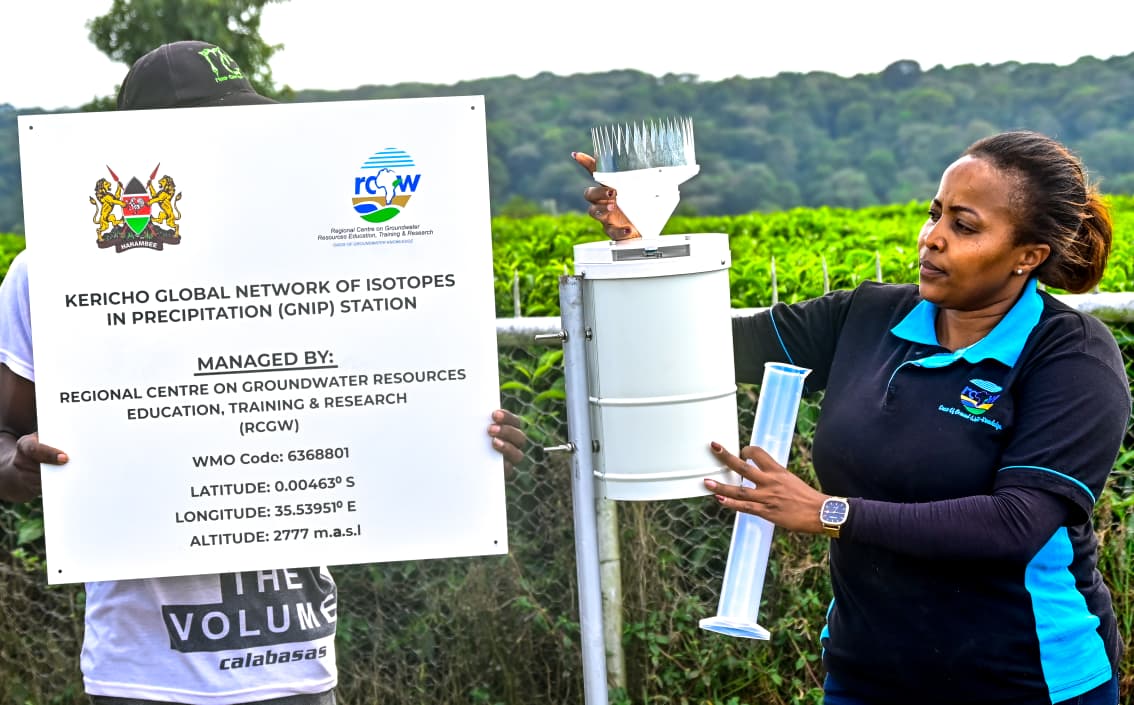
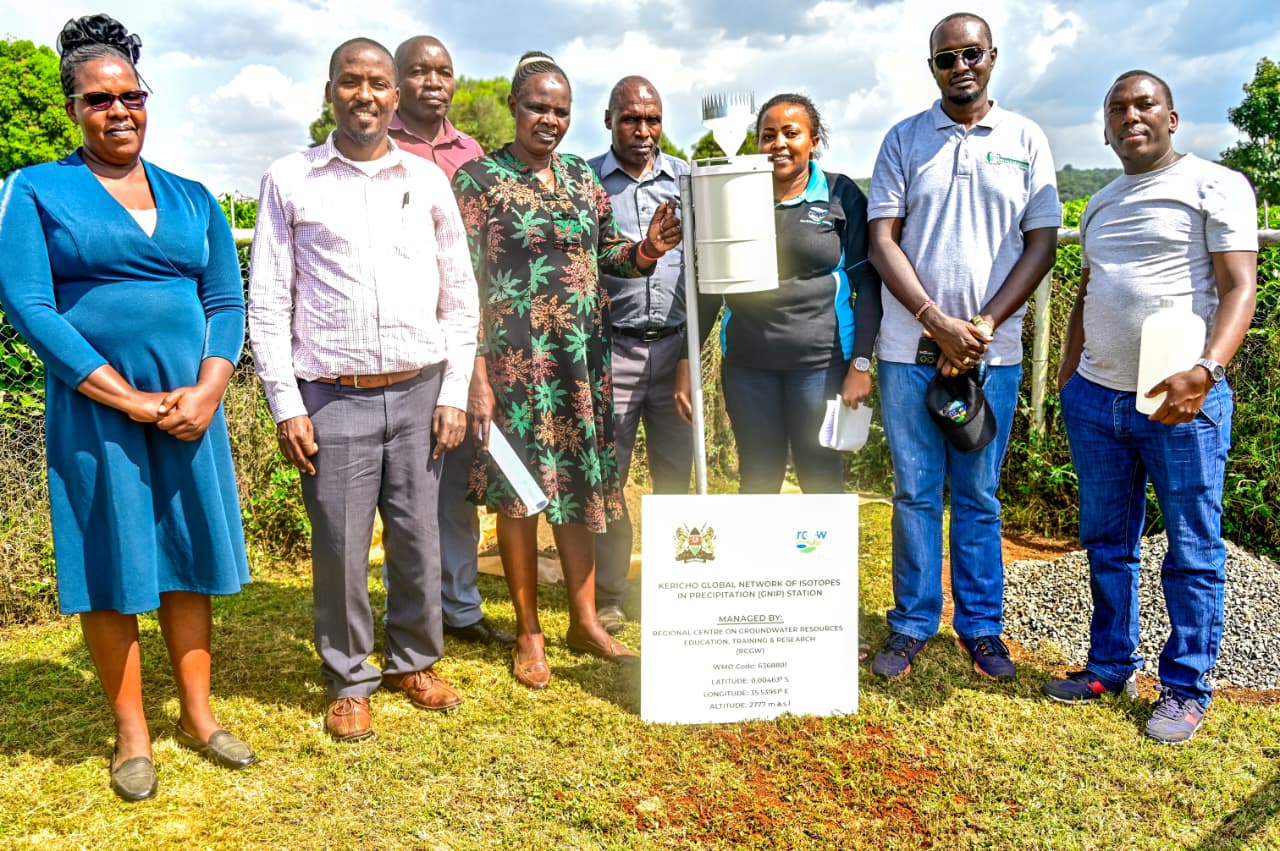
The government has re-established a rainfall isotope monitoring station in Kericho County, under the Global Network of Isotopes in Precipitation (GNIP).
This marks the first collection of such scientific data in the area since 1968, significantly strengthening Kenya’s capacity to manage water resources using modern climate science.
The newly installed GNIP station, located at the Tea Research Institute in Kericho, will systematically collect and analyze rainwater to determine its isotopic composition, helping scientists trace how rainfall contributes to groundwater recharge, river flows and soil moisture essential for agriculture and domestic use.
Speaking to Kenya News Agency (KNA) during the installation, Regional Centre on Groundwater Resources Chief Executive Officer, Patrick Murunga, said the revival of the Kericho station fills a 58-year scientific data gap and restores the region’s position in a globally recognized rainfall monitoring network.
“This station gives us an opportunity to begin collecting data again and compare what was observed in the 1960s, with what is happening now, which is extremely important in understanding changes in our water resources,” he explained.
Murunga noted that historical data from the original Kericho station, which operated between 1967 and 1968, remains archived, under the World Meteorological Organization system, making the renewed monitoring effort a direct continuation of internationally referenced scientific records.
At the same time, the CEO emphasized that the GNIP programme strengthens research in groundwater, agriculture and environmental management, while boosting Kenya’s laboratory credibility through quality control partnerships with the International Atomic Energy Agency (IAEA).
Murunga pointed out that the station will benefit tea farmers, households, water managers and county planners by providing accurate rainfall source data that supports irrigation planning, drought preparedness and sustainable allocation of water resources.
Meanwhile, the Regional Centre on Groundwater Resources hydrologist, Cynthia Wachuka, said the Kericho GNIP station will analyze rainwater for stable isotopes such as Oxygen-18 and Deuterium to help scientists understand the origin and movement of water within the hydrological cycle.
“This station allows us to understand our water resources from the source, which is rainfall, and this information is critical for long-term water planning and climate studies,” she explained.
Wachuka emphasized that rainfall samples will be collected monthly and analyzed over a four-to-seven-year period to generate dependable average values that eliminate distortions from extreme rainfall seasons and enable scientists to establish a Local Meteoric Water Line for Kericho.
The Hydrologist pointed out that a Local Meteoric Water Line is essential because rainfall characteristics differ from one region to another and localized isotope data helps accurately link rainwater to groundwater, springs and rivers relied upon by communities and farms.